


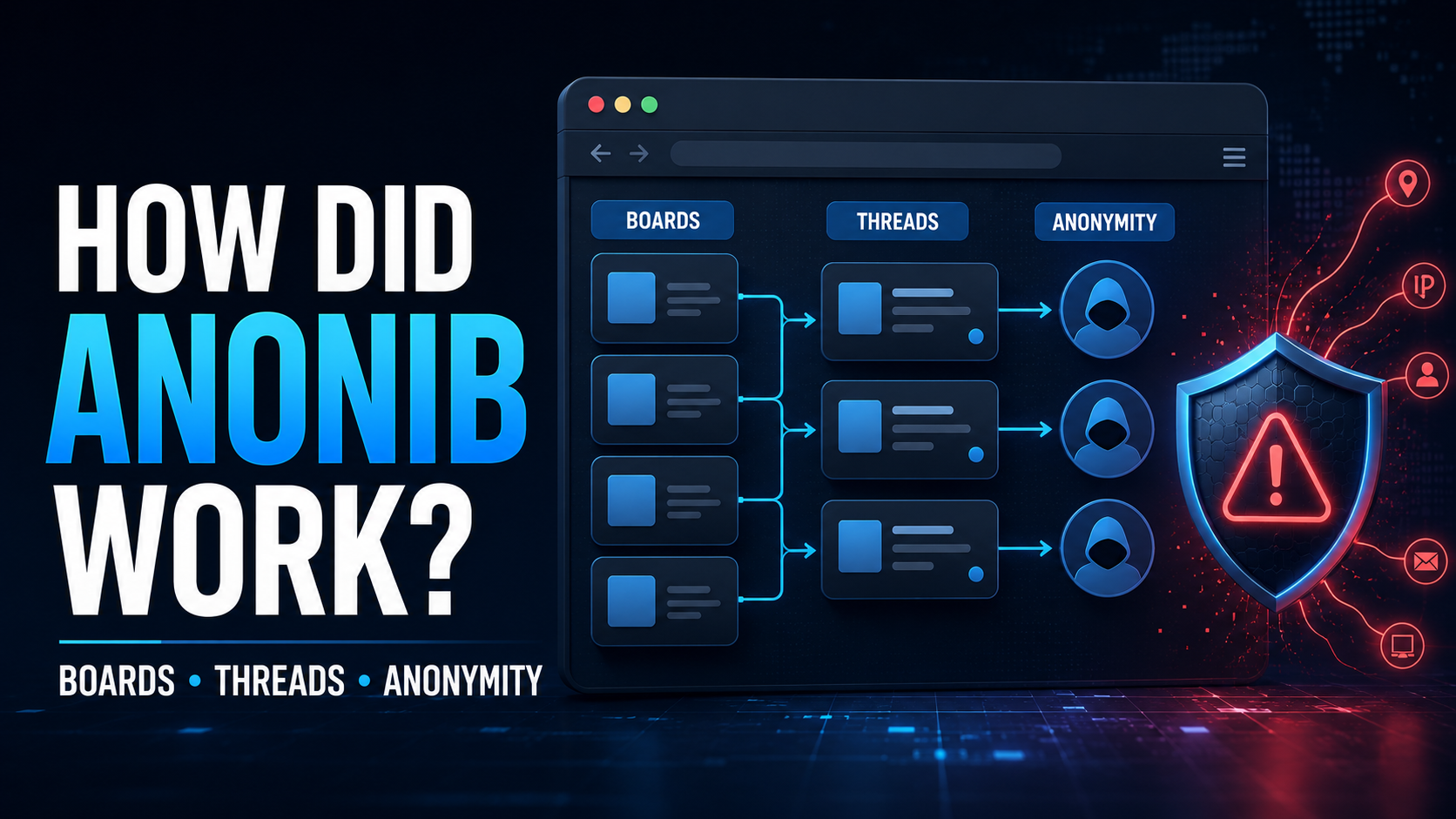
AnonIB looked simple on the surface. Visitors entered a board, opened a thread, posted an image or comment, and interacted without consistently showing a permanent public identity.
That basic format was not unique. Many anonymous imageboards use boards and temporary threads to host discussions about art, games, technology, hobbies, and popular culture. What made AnonIB notorious was how its structure was used.
Threads were frequently organized around countries, cities, schools, universities, workplaces, and particular individuals. Users could request photographs of people from a specific area, add identifying details, and encourage others to contribute more material. Some of those images had reportedly been stolen from private accounts or distributed without the depicted person’s consent.
The result was not merely an anonymous forum. It became an environment where image-based abuse, doxxing, account hacking, harassment, and privacy invasion could reinforce one another.
AnonIB at a Glance
| Feature | How it functioned | Why it created risk |
|---|---|---|
| Boards | Divided discussions into countries, regions, interests, or communities | Location categories made individuals easier to identify |
| Threads | Grouped images and comments around a topic or person | A single post could become an ongoing collection |
| Anonymous posting | Reduced the amount of public identity attached to contributors | Users could feel less accountable for harmful behavior |
| Image uploads | Allowed visual material to be shared quickly | Private or stolen images could spread rapidly |
| Replies and requests | Let users ask other visitors for more content | Turned individual abuse into a crowdsourced activity |
| Personal details | Names and social profiles could appear beside images | Increased the likelihood of doxxing and offline harassment |
| Reposting | Files could be downloaded and uploaded elsewhere | Removal from one thread did not erase every copy |
What Is an Anonymous Imageboard?
An imageboard is a type of online forum built around images and short discussions. Instead of creating a long personal profile, a visitor generally chooses a board, starts or opens a thread, and contributes an image or comment.
A conventional discussion forum usually emphasizes registered accounts, usernames, profiles, and long-running conversations. An imageboard often places greater importance on the content of an individual post than the identity of its author.
A typical structure looks like this:
- The website contains several boards.
- Each board covers a subject, community, or location.
- Users create individual threads inside a board.
- Other users reply with comments, images, or links.
- Older threads may disappear or move down as new posts arrive.
- Public-facing identities may be temporary, incomplete, or absent.
This structure can support harmless communities. Anonymous posting can protect whistleblowers, vulnerable people, political critics, or anyone who does not want every online opinion attached to a permanent profile.
The problem begins when weak accountability is combined with personal targeting and invasive material.
Australia’s eSafety Commissioner notes that anonymity can protect privacy and freedom of expression, but it can also be misused to control and abuse people. Anonymous users may feel less restrained by ordinary social consequences, while fake identities can help offenders exploit others. eSafety’s guidance on online anonymity explains both sides of this issue.
How Were AnonIB Boards Organized?
AnonIB divided content into separate boards. Some were reportedly arranged by geographic area, including countries, states, cities, and local communities.
This made the forum more dangerous than a completely random collection of anonymous images.
A photograph placed in a broad international gallery might be difficult to connect with a real person. The same photograph placed inside a thread for a specific city, university, or school immediately gives visitors another identifying clue.
A thread title or reply could narrow the identity further by including:
- A first name or nickname
- A surname initial
- A social-media username
- A school or university
- An employer
- A sports team or community group
- A neighborhood
- A graduation year
- The name of a friend or partner
Each clue might seem incomplete alone. Together, they could make someone recognizable to classmates, coworkers, neighbors, or family members.
Contemporary reporting described AnonIB as being categorized by country and allowing users to request images based on a woman’s location. ABC News’ report on the 2018 shutdown also documented concerns about school information and other personally identifiable details appearing with images.
How Did AnonIB Threads Work?
A thread functioned like a small discussion page inside a larger board.
One user could begin with an image, a name, a location, or a request. Other anonymous visitors could then reply, add information, post more files, or ask for content involving the same person.
This changed the scale of the harm.
Instead of one person possessing or posting an image, a group of strangers could participate in collecting, identifying, and redistributing material. Someone might recognize a social profile. Another visitor might provide a surname. A third could add an older photograph or mention where the person worked.
The thread could gradually become a collection of images and personal information assembled by people who had never met one another.
This is one reason the phrase “someone posted a picture” does not fully describe what occurred. The imageboard format could turn a single privacy violation into an organized, ongoing campaign.
Where Did the Images Come From?
Material associated with AnonIB could come from several sources.
Privately Shared Images
A person may have sent an image to a partner or trusted individual with the expectation that it would remain private. The recipient could later upload it without permission.
Agreeing to send an image to one person is not permission for that person to publish it publicly.
Hacked Email and Cloud Accounts
Some private files were reportedly obtained through unauthorized access to email, social-media, or cloud-storage accounts.
This could happen through reused passwords, phishing pages, weak recovery settings, stolen devices, or other account compromises.
Hacking the account and publishing the resulting files are separate violations. The fact that an offender successfully accessed an image does not give them any right to distribute it.
Public Social-Media Photographs
Not every image had originally been private or explicit. An ordinary profile photograph could be copied from social media and placed in an invasive or sexual context.
The image itself might be publicly viewable, but its new presentation could still expose the person to harassment, false sexual associations, or unwanted identification.
Reposts From Other Forums
Users could download files from one site and upload them to another. As images moved between platforms, information about their origin and consent could disappear.
A later uploader might claim a file came from an “archive” without proving when, where, or how it was obtained.
Altered and Mislabelled Material
Images can be cropped, edited, falsely captioned, or attributed to the wrong individual. Modern AI tools also make it possible to create synthetic sexual images from ordinary photographs.
The Cyber Civil Rights Initiative uses image-based sexual abuse as a broad term covering the non-consensual creation or distribution of private sexual images. It includes hacked material, images originally created consensually, hidden recordings, sextortion, and synthetic deepfakes. CCRI’s terminology guide explains why the commonly used phrase “revenge porn” is often too narrow.
How Did Location-Based Threads Enable Doxxing?
Doxxing is the exposure of someone’s identity or personal information online without consent, generally with the intention of causing harm.
On an AnonIB-style forum, doxxing did not always require publishing a complete home address. Smaller pieces of information could be combined to identify a person.
For example, a thread might contain:
- A photograph copied from a private account
- A first name
- A city-based board
- A reference to a university
- A visible social-media username
- Replies from someone claiming to know the person
That combination could allow strangers to locate other profiles, contact the victim, or spread the post within the person’s real-life community.
Doxxing can involve information gathered from public sources, private databases, hacked accounts, or a combination of all three. According to the eSafety Commissioner’s doxxing guidance, exposed information can undermine a person’s privacy, physical safety, security, and reputation.
Why Did Anonymous Posting Change User Behavior?
A visible username does not automatically prevent abuse, and anonymous communication is not inherently harmful. However, public anonymity can reduce the immediate social cost of a post.
A user may believe:
- Friends and family will never know what they posted.
- The person depicted cannot identify them.
- Other visitors will approve of the behavior.
- The forum’s operators will not remove the content.
- Law enforcement cannot trace an anonymous account.
- Responsibility is shared across so many users that no individual will face consequences.
Those assumptions can encourage conduct that the same person might avoid under their real name.
The surrounding community also matters. When users reward invasive requests with attention, replies, and more images, harmful behavior can begin to feel normal inside the group—even though it remains a serious violation outside that environment.
Was AnonIB Truly Anonymous?
AnonIB offered public-facing anonymity, but that does not mean every user was technically untraceable.
A post can omit a real name while still leaving other types of evidence, including:
- IP and server records
- Browser and device information
- Email addresses
- Account activity
- File metadata
- Payment information
- Messages exchanged with other users
- Records held by hosting or infrastructure providers
- Evidence recovered from a seized device
Whether those records exist depends on the website, its infrastructure, retention practices, and the steps taken by investigators.
“Anonymous” usually means that ordinary visitors cannot immediately see who made the post. It does not guarantee that investigators will never connect the activity with a real person.
Why Was Moderation So Important?
A platform’s design influences what users can do, but moderation determines which behavior is allowed to continue.
An imageboard handling user uploads needs clear rules and effective systems for:
- Reporting non-consensual intimate images
- Removing personal information
- Responding to threats and harassment
- Detecting repeat uploads
- Handling material involving minors
- Preserving relevant information for lawful investigations
- Preventing banned users from immediately returning
- Reviewing content before or shortly after publication
Rules alone are not enough. If users can easily avoid them through misspellings, coded references, cropped images, or slightly altered personal details, the harmful content effectively remains permitted.
VICE reported that an attempted AnonIB revival copied the original site’s name and appearance. The report also described how users of the earlier site could work around restrictions on posting victims’ contact information. The 2020 investigation illustrates why written policies mean little without consistent enforcement.
How Did Content Spread Beyond One Thread?
Once an image was uploaded, other visitors could save or repost it. Copies might move to:
- Another thread
- A different imageboard
- A private messaging group
- A cloud-storage folder
- A social-media account
- A file-sharing service
- An alleged archive
- A newly registered copycat website
The uploader could also crop the image, add text, change its filename, or reduce its quality. These changes make manual tracking more difficult.
Deleting the first post therefore did not guarantee that every copy disappeared. It was still valuable because it removed a major source and reduced future exposure, but victims often had to report several pages separately.
Modern hashing services such as StopNCII and Take It Down attempt to limit identical reuploads on participating platforms. They are helpful, but no service can remove every altered copy from the entire internet.
Why Did the Forum Become So Harmful?
Several design and cultural factors worked together:
Geographic Organization
Location-based boards made ordinary people easier to identify within their local communities.
Low Public Accountability
Users could post without consistently attaching the material to a stable public identity.
Group Participation
Replies allowed multiple strangers to contribute images and identifying information.
Easy Copying
Digital files could be saved and redistributed quickly.
Weak Consent Standards
The culture treated access to an image as though it granted permission to republish it.
Insufficient Moderation
Rules could not protect victims when enforcement was inconsistent or easily avoided.
Cross-Border Infrastructure
A victim, uploader, website operator, and hosting provider could all be located in different countries, making reporting and enforcement more complicated.
The harm did not come from one feature alone. It came from combining anonymous participation, personal targeting, image uploads, geographic categories, and weak accountability.
What Happened to the Original AnonIB?
Dutch authorities seized the original AnonIB server in April 2018 following a cybercrime investigation. Several people were arrested in connection with the wider case.
The seizure was significant because it disrupted the central forum and gave investigators potential access to infrastructure and records. However, it could not automatically delete files that users had already copied elsewhere.
Later websites reused the AnonIB name or claimed to possess archives. Those pages should not be assumed to have any verified relationship with the original operation.
For a closer look at the shutdown and later copycats, read Is AnonIB Still Active?.
Was AnonIB the Same as Social Media?
Not exactly.
Social networks generally organize content around user accounts, profiles, followers, and personal feeds. AnonIB organized activity primarily around boards, threads, images, and subjects.
That difference affected how people interacted.
On ordinary social media, a user often builds a recognizable identity over time. On an anonymous imageboard, a person can contribute to one thread without creating the same persistent public presence.
However, both types of platforms can be misused. Fake accounts, private groups, reposting tools, direct messages, and recommendation systems can also spread non-consensual material on mainstream services.
The central issue is not whether a platform is called an imageboard or social network. It is whether it protects consent, privacy, safety, and meaningful reporting.
Did a Private Image Become Public Property After Uploading?
No.
Access does not equal ownership, and ownership does not automatically equal permission to publish. Even the person who originally took or received a photograph may lack consent to distribute it.
Online consent must be specific. A person can agree to:
- Create an image but not share it
- Send it to one person but not a group
- Post it on one platform but not another
- Keep it online temporarily and later withdraw permission
Consent for one action does not silently authorize every future use. eSafety’s online consent guidance emphasizes that consent must be informed, freely given, specific, clearly communicated, and capable of being withdrawn.
What Should You Do If You Are Mentioned in a Thread?
Do not argue with anonymous posters immediately. First:
- Record the exact page address.
- Preserve limited screenshots showing the necessary context.
- Note usernames, dates, threats, and personal information.
- Report the content to the website.
- Request removal from search engines.
- Secure your email, cloud, and social accounts.
- Contact law enforcement if there are credible threats.
- Do not download explicit content involving anyone under 18.
- Ask a trusted person or specialist organization for support.
Our detailed AnonIB image-removal guide explains each step and the available reporting tools.
What the AnonIB Structure Teaches About Online Privacy
AnonIB demonstrated how a simple forum structure can become dangerous when it connects anonymous contributors with identifiable targets.
The uploader could remain publicly unnamed while the depicted person’s city, school, social profile, and private photographs were exposed. In other words, anonymity protected the contributor while stripping privacy from the victim.
That imbalance is the central problem.
Healthy online anonymity protects people who need privacy. Abusive anonymity is used to remove accountability while exposing, threatening, or exploiting someone else. The difference is not the absence of a real username—it is what the user does with that protection.
The original AnonIB was shut down, but its history remains relevant wherever anonymous accounts, personal information, weak moderation, and non-consensual imagery appear together.

2 Comments
Pingback: AnonIB Mirrors and Archives: Copycat Sites, Scams, and Malware Risks - anonib
Pingback: AnonIB Reuploads: Why Removed Images Return and How to Limit Copies - anonib